|
ROBOTICS and SPACE EXPLORATION
PLEASE USE OUR A TO Z INDEX TO NAVIGATE THIS SITE OR CALL HOME
|
||||||||||||
|
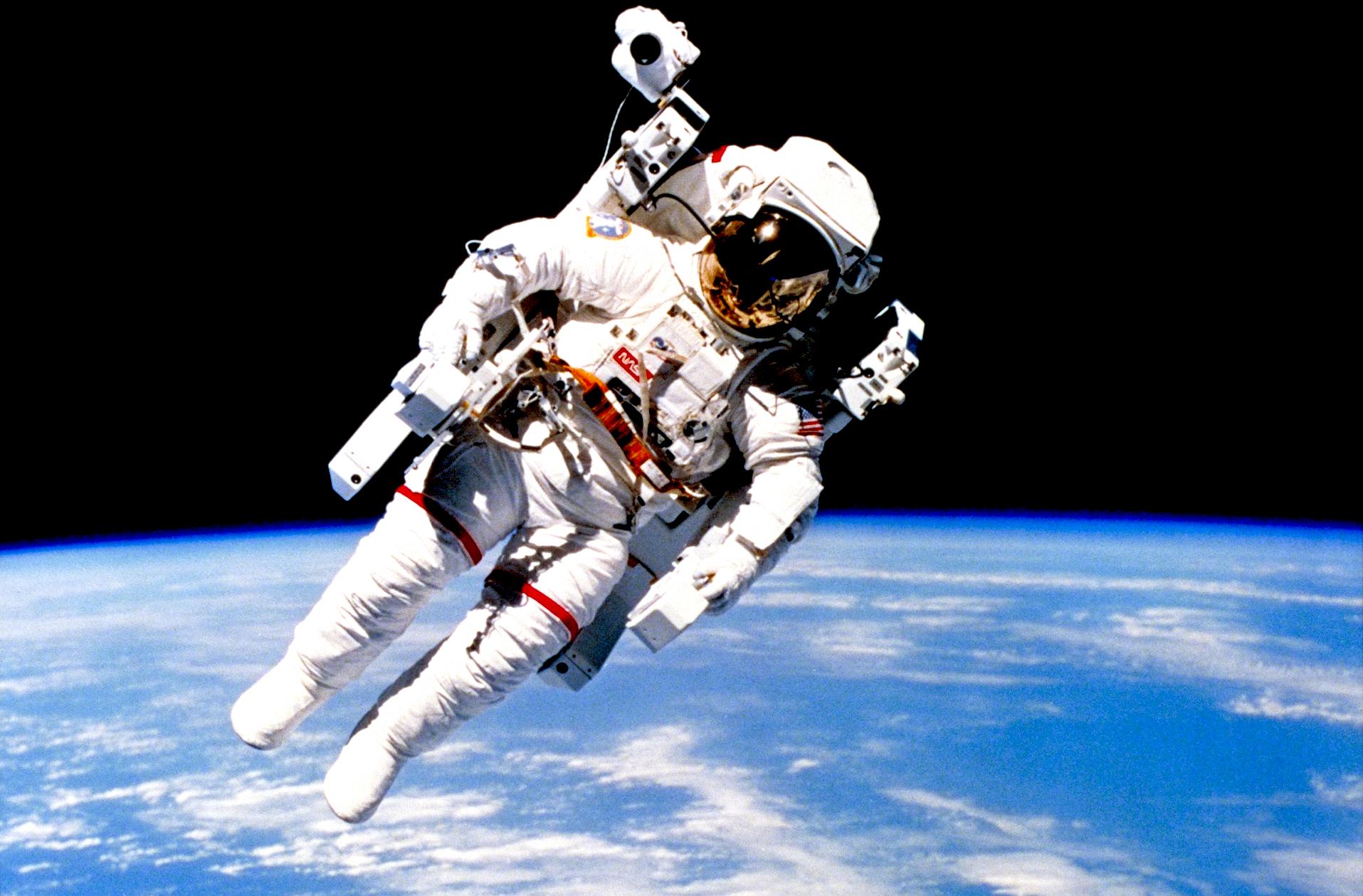
HELLO - Hi everyone and welcome to my website. No, that's not me hovering above the planet, but I wish that it had been. Though it is very cold and lonely in space, unless you have a mission to carry out. It is amazing that man has walked on the Moon.
Will planet earth still be here when for much longer? Doubtful at the present rate of excesses, and constant warmongering. It would only take one moment of political madness to wipe out the planet, in a thermonuclear holocaust. Millions of years of evolution are at risk, as differences of opinion and religious beliefs fuel aggression. With this in mind, how might we colonize other suitable planets?
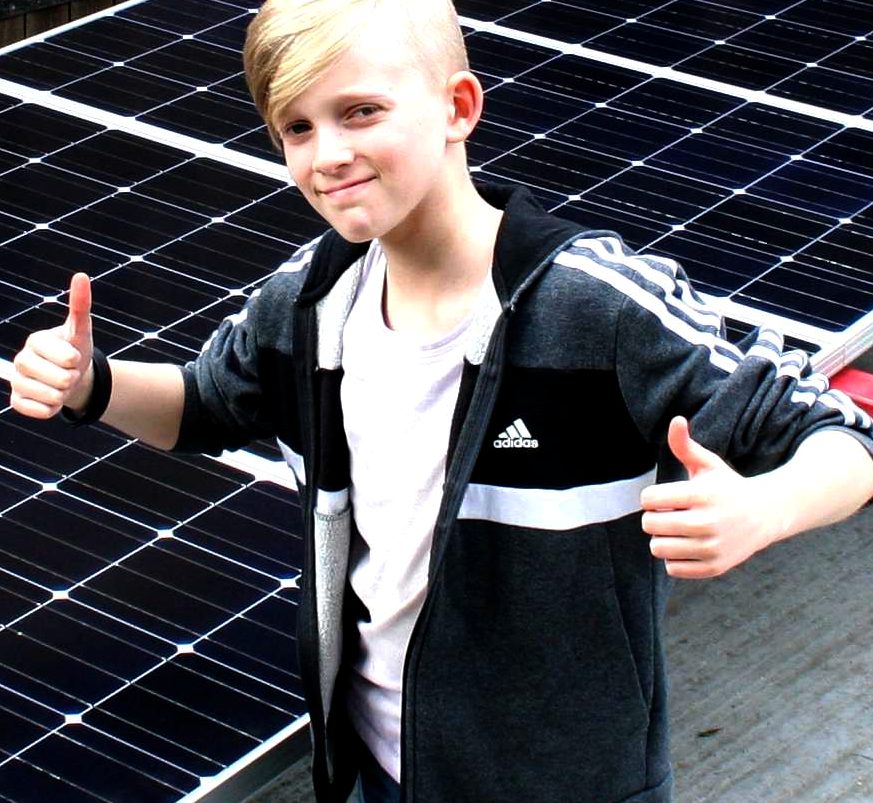
ABOUT OUR FOUNDER - Ryan lives near Eastbourne in Sussex, which is on the South Coast of England. Like many teenagers, he is worried about climate change and protecting species on planet earth. That is why he thinks we may need another planet, if we keep on warming where we live at the present rate. We need more solar and wind turbine farms to create green electricity and hydrogen to stave off possible extinction. Ryan is very lucky to have his own workshop, power (hand) tools and an uncle who knows how to weld, because he was a bit young for that. Welding is scary!
Space exploration depends on robots and automation. This is because man does not (yet) live long enough to travel the vast distances involved to be able to explore planets for himself as a visitor, and cryogenics is not advanced enough to freeze and thaw humans at the end of a long journey - though this is technology that may one day yield results.
Even travel at the speed of light would not overcome the ability of man to visit planets that are light years away. Space ships may eventually visit such locations, but the time it would take to transmit useful information back to earth, seriously limits what may be achieved by follow on generations, who might forget about earlier missions - or cease to exist. Unless, a historic time capsule accompanies future pioneering pilgrims, as a guide how not to do it.
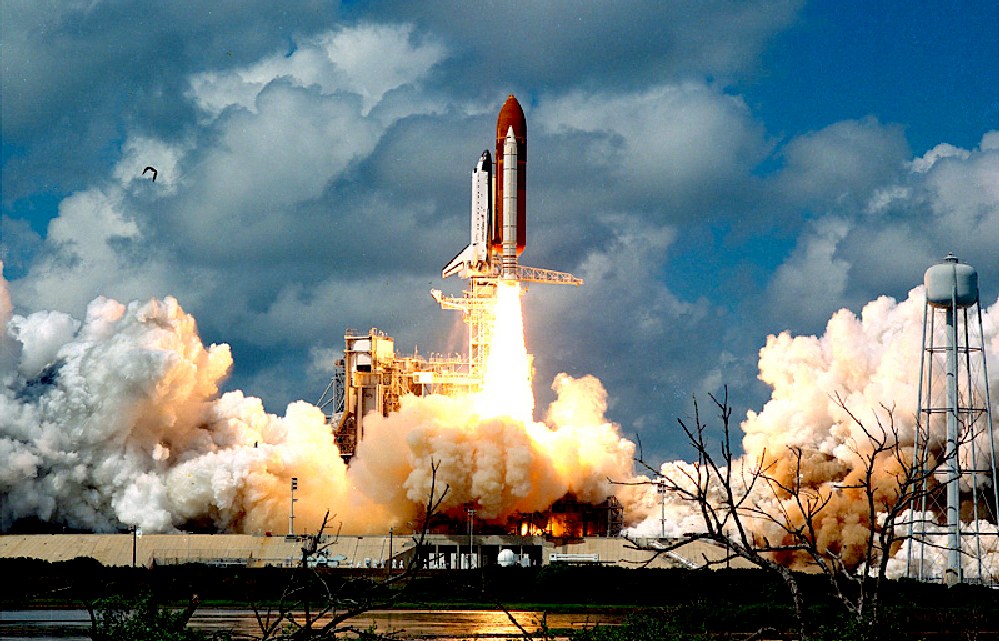
SPACE RACE - It's more of a crawl now, but when Russia put their Sputnik in orbit, the USA went into overdrive, trying to beat that achievement. That led to Man walking on the Moon, and the Space Shuttle. The new target is Mars. The Space Shuttle is launched into space with liquid hydrogen (LH2) and liquid oxygen (LOX) rocket motors. NASA developed the cryogenic tanks that may one day allow us to trade and transport LH2, the same way we trade and transport oil in tankers. Thank you NASA : )
STAR
WARS - I am worried about China shooting at
their redundant satellites with lasers, causing debris that is potentially
dangerous to stations. Weapons in space. and weapons aimed at space. should be banned.
Air Chief Marshal, Sir Mike Wigston is quoted as saying that Russia has deployed satellites that "we would describe as having the characteristic of a weapon and they
practiced a maneuver, that we would say, could only have been done to deliberately destroy another satellite".
Alternative ways of visiting other worlds in person, might be cloning humans from frozen eggs, conditioning their brains and uploading memories, to recreate the scientists of today, again, for tomorrow. We will discuss this in more detail later in the development of this website - we need time to think about this.
The way we are treating planet earth, we could need a B planet sooner than space researchers think, to keep humans and other species on earth alive, as Planet A first dries up then floods. We wonder if they (World Bank, IMF, etc) should hit the reset button on printed money and stop the financial clock. That would reverse climate change via economic cooling. We wonder if printed money should once again be index linked to the real world. Today, this might be in relation to that planet earth can comfortably sustain. Unfortunately, not the perpetual growth most politicians thrive on. promising the earth, but knowing they cannot deliver.
Mars is the nearest potential planet for colonization, but is extremely inhospitable with no atmosphere to speak of, being 95% carbon dioxide.
|
||||||||||||
|
||||||||||||
|
PRACTICAL EXPLORATION
Right here and now, we might explore moons and planets that are relatively close, using satellites with sensitive sensor arrays, telescopes and cameras - and fabulous surface vehicles like the Lunar and Mars Rovers.
Inevitably, these surface rovers have wheels or tracks that have limited ability to overcome rough terrain. Rovers on Mars or the Moon, designed for planetary exploration, are of increasing importance to spaceflight nations, but wheels will obviously skid and slip on loose soil and rocks.
Man is bipedal, also having hands and arms and the ability to grasp objects with his hands, such as to climb vertical obstacles and swing in trees. Insects and arachnids are even more adept at scaling uneven surfaces. They can walk upside down on some surfaces.
The effective exploration of planets, will need rovers with climbing ability to near equal that of at least a man. This is one of the goals of this website and the projects featured, to include encouraging others to think about how this may be achieved.
AUTONOMY
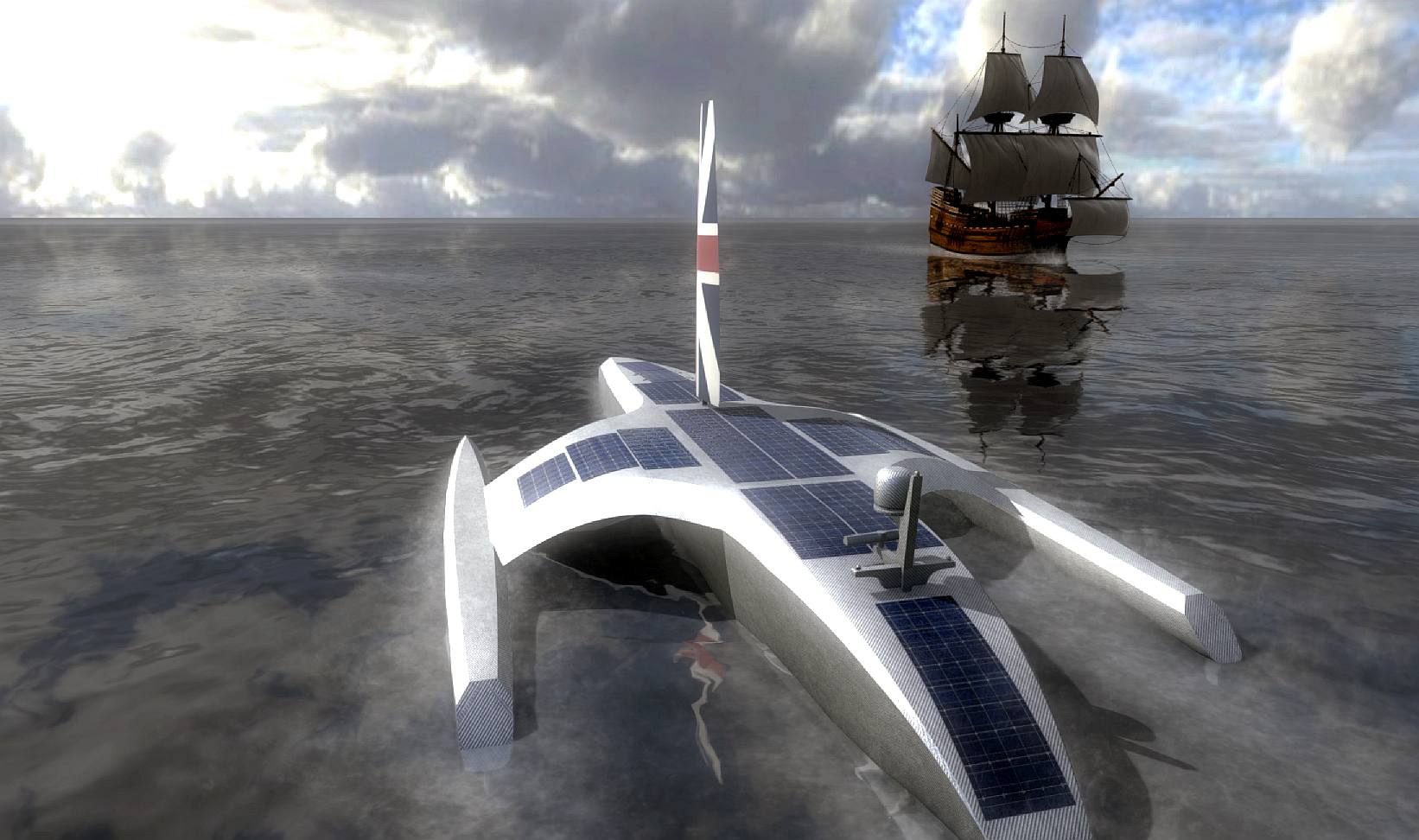
However it is that we continue with our explorations, autonomy is vitally important. As we write, we have not yet navigated our oceans autonomously. The Mayflower Autonomous Ship project: MAS400, attempted to make it across the Atlantic Ocean in 2021. How might mankind fare in trying to reach Proxima Centauri, part of the Alpha Centauri system, some 4.24 light years away. Its planet Proxima Centauri b lies in the habitable zone, where liquid water could exist, to support life as we know it.
PROGRAMMING
Apart from mechanical design and engineering, the computers onboard an exploration rover, and the programming that operates them, is arguably the most important feature. Coding is now part of most school curriculums. AI is the most important recent development. Allowing machines to think.
FICTION
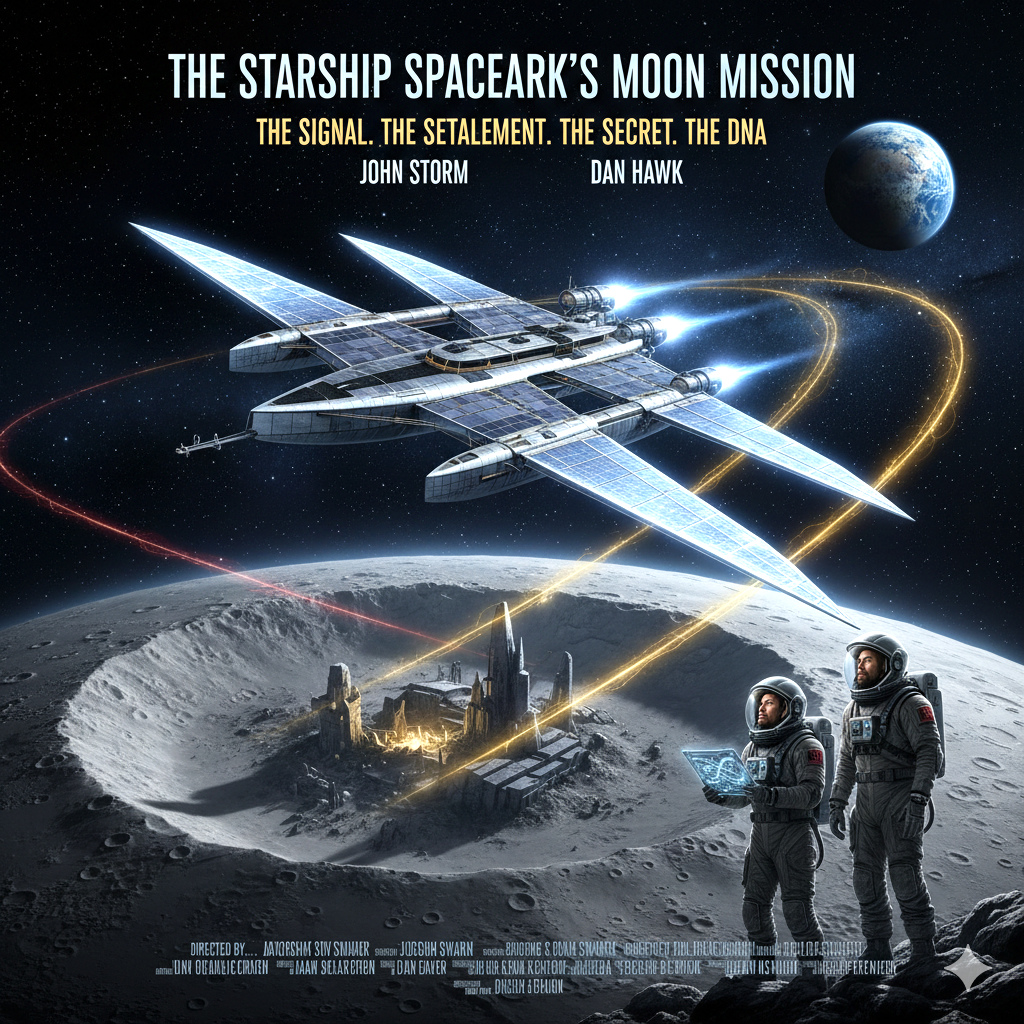
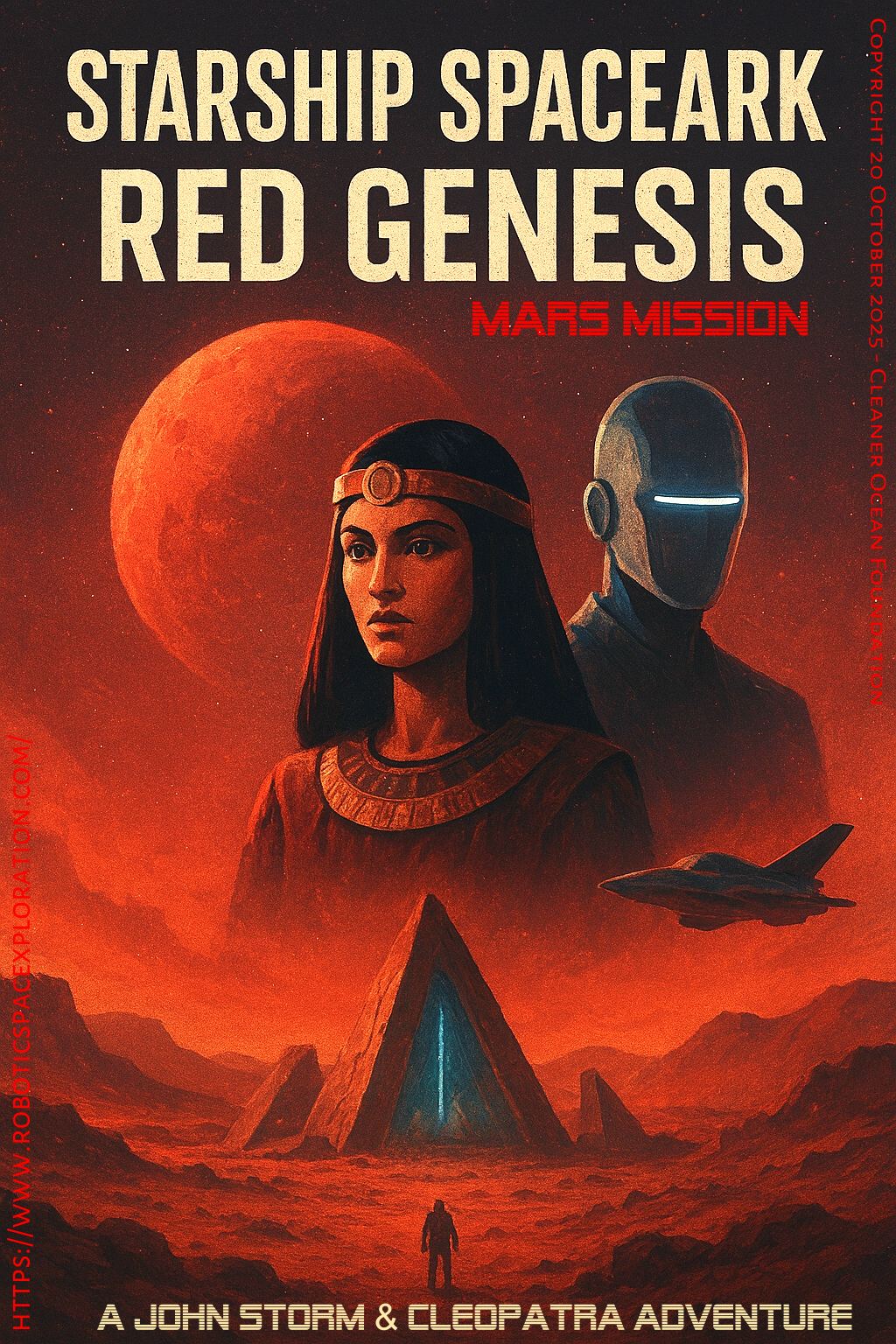
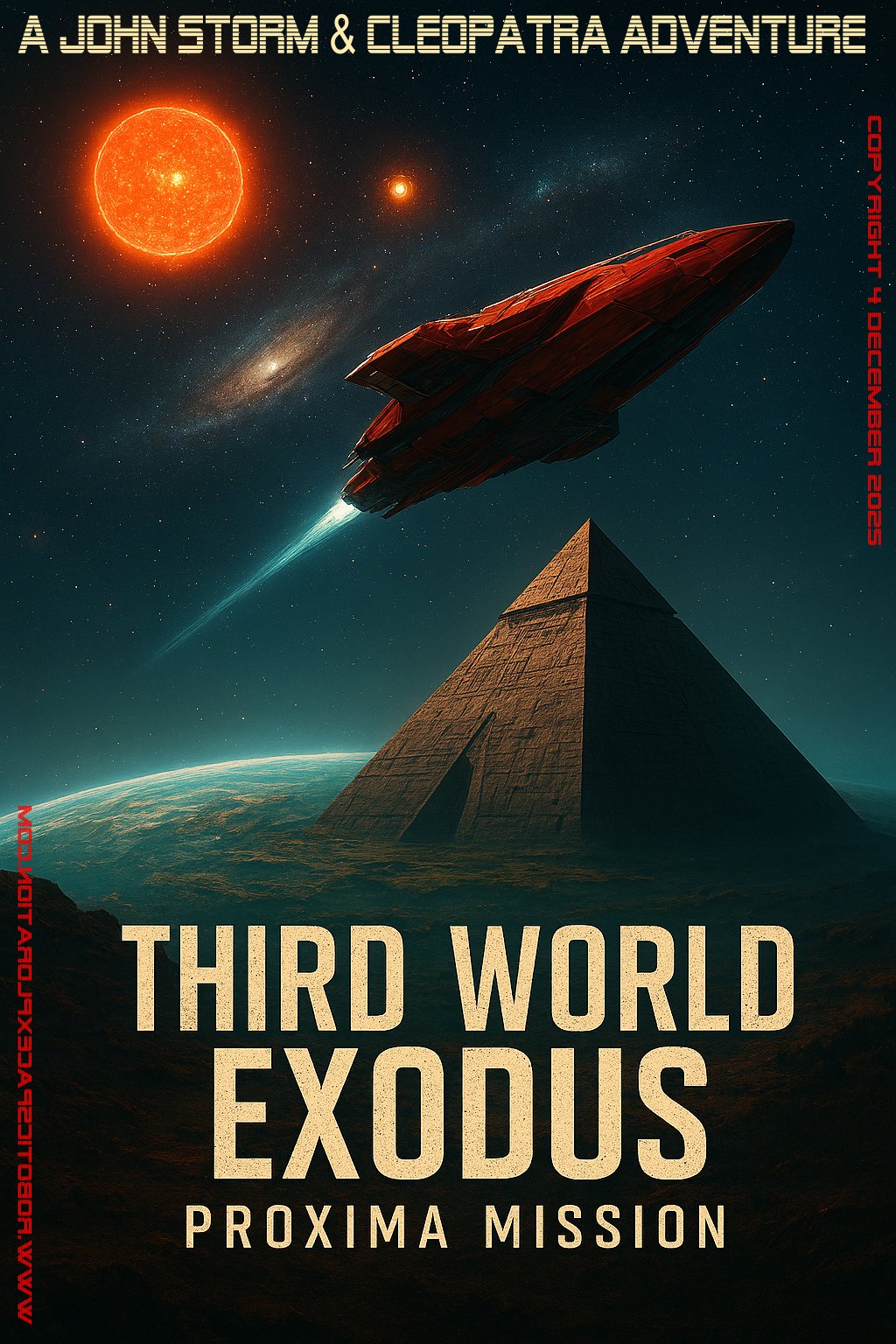
In the quest to map the Moon and Mars, (fictionally), John Storm agrees to a Lunar survey, using his ARK and HAL AI, with Dr. Elias Vance converting the Elizabeth Swann into a V2, for a Moon landing and return. Then, gets talked into a mission to Mars, with a SpaceArk™ special V3 craft. Who wouldn't? Finally, an Exodus mission to Proxima Centauri, raises the bar.
|
||||||||||||
|
This website is Copyright © 2025 Planet Earth Trust.. The design of Rough Terrain Robots featured on this website are subject to design copyright © with all rights reserved - unless stated otherwise.
|